

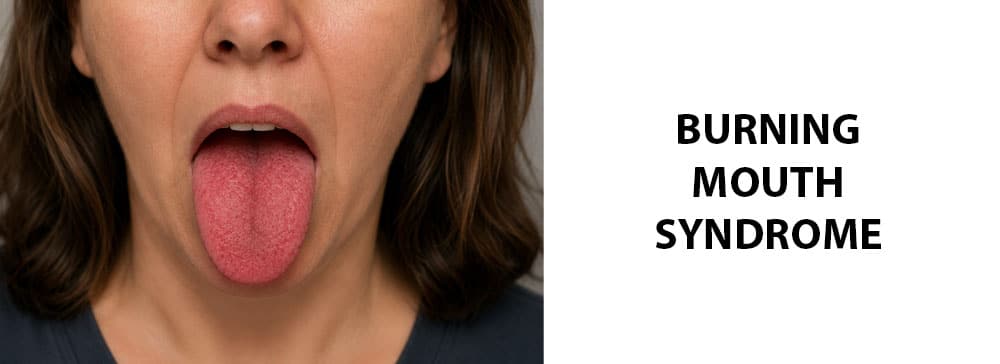
Burning Mouth Syndrome is a frustrating condition because it can often be hard to explain what’s really happening. If this is something you’ve been dealing with, you’re definitely not alone. In this post, we’ll help you better understand the possible causes, common symptoms, treatment options, and ways to help prevent it so you can feel more informed and prepared moving forward. If you think you have burning mouth syndrome and live in Utah, we’re ready to help you and have offices conveniently located near Salt Lake City and South Jordan.
What is Burning Mouth Syndrome?
Burning Mouth Syndrome is a condition in which your mouth feels like it’s burning, tingling, or irritated, even though everything else seems totally normal. It can be compared to drinking coffee that was way too hot, but that burning feeling never went away. It can affect the tongue, lips, gums, roof of the mouth, or even the entire mouth. The pain or discomfort might come and go, or it can last for even longer stretches. Because there usually aren’t any obvious visible signs, diagnosing Burning Mouth Syndrome often involves ruling out other conditions first.
What Causes Burning Mouth Syndrome?
The tricky thing is that it’s not always easy to pinpoint what exactly causes burning mouth syndrome. In some cases, it seems to be related to problems with the nerves that control pain and taste in the mouth. Other times, it may be tied to something else going on in the body. Things like acid reflux, dry mouth, teeth grinding, allergies to dental products or certain foods, hormone changes, diabetes, vitamin deficiencies, thyroid problems, and some medications have all been linked to it.
Stress and anxiety can also play a role for a lot of people. Stress can affect how the nerves in the mouth respond and how the brain processes pain signals. Sometimes doctors find an underlying issue that can be treated, and other times no obvious cause shows up at all. Burning Mouth Syndrome also tends to be more common in middle-aged and older adults, especially women going through or after menopause. Hormonal changes are believed to play a role in some cases.
Symptoms of Burning Mouth Syndrome
Symptoms can vary quite a bit from person to person, which can make diagnosis somewhat difficult. We’ve compiled a list of the most common symptoms below:
- A burning, hot, or scalded feeling in the mouth
- Pain or irritation on the tongue, lips, gums, roof of the mouth, or inside the cheeks
- Dry mouth or feeling unusually thirsty
- A bitter or metallic taste
- Changes in how foods and drinks taste
- Tingling or numbness in the mouth
- Symptoms that get worse as the day goes on
- Discomfort that improves while eating or drinking for some people 9. Pain that comes and goes or lasts most of the day
What is Primary Burning Mouth Syndrome?
Primary Burning Mouth Syndrome is when burning mouth syndrome happens without another medical condition that has clearly caused it. In other words, doctors can’t trace it back to something like a vitamin deficiency, acid reflux, diabetes, or a medication side effect. It’s generally believed to be related to issues involving the nerves connected to pain, taste, or sensation in the mouth.
What is Secondary Burning Mouth Syndrome?
Secondary Burning Mouth Syndrome is different because the burning sensation is linked to another underlying problem rather than happening on its own. That could include dry mouth, oral infections, hormonal changes, allergies, acid reflux, or irritation from dental appliances or certain medications. In these cases, the mouth discomfort is more of a symptom of something else going on in the body. The good thing about secondary burning mouth syndrome is that when the underlying issue is figured out and treated, the burning symptoms usually improve as well.
Burnt Tongue Disease vs Burning Mouth Syndrome
People sometimes use the term “burnt tongue disease” when talking about Burning Mouth Syndrome, but they aren’t really the same thing. “Burnt tongue” is more of a casual description people use when their tongue feels irritated, sensitive, or like it was burned by eating or drinking something hot. That feeling can happen for a lot of reasons, including an actual burn, irritation from spicy or acidic foods, dry mouth, infections, allergies, or temporary inflammation.
Burning mouth syndrome is more specific and tends to be ongoing rather than temporary. It also isn’t limited to just the tongue. The burning sensation can affect different areas of the mouth and might continue even when there is no visible injury or irritation.
Helpful Treatments for Burning Mouth Syndrome
- Staying hydrated throughout the day
Dry mouth can make the burning feel worse for many people.
- Identifying and treating underlying causes
Things like vitamin deficiencies, acid reflux, oral infections, allergies, or hormone changes can sometimes trigger symptoms.
- Managing stress and anxiety
Stress doesn’t always cause burning mouth syndrome, but it can make symptoms feel more intense.
- Avoiding irritating foods and drinks
Spicy foods, acidic drinks, alcohol, and very hot foods can aggravate the burning sensation.
- Using saliva substitutes or dry mouth products
These may help if dryness is part of the problem.
- Changing oral care products
Some people react poorly to certain toothpastes, mouthwashes, or strong flavorings like cinnamon or mint.
- Prescription medications
In some cases, doctors may recommend medications that target nerve pain or help calm overactive nerve signals.
- Alpha lipoic acid or certain supplements
Some studies suggest certain supplements may help nerve-related symptoms in some individuals.
Helpful Treatments for Burnt Tongue Disease
- Giving the tongue time to heal
Minor burns from hot foods or drinks often improve on their own within several days.
- Rinsing with cool water or salt water
This may help soothe irritation and keep the area cleaner while healing.
- Avoiding spicy, salty, or acidic foods
These can irritate already sensitive tissue.
- Eating softer and cooler foods
Smooth foods like yogurt, applesauce, or smoothies are often more comfortable.
- Using over the counter pain relief if needed
Some people use numbing gels or mild pain relievers for temporary comfort.
- Avoiding smoking or alcohol
Both can slow healing and increase irritation.
- Watching for signs of infection or lingering symptoms
If the tongue is not improving, becomes swollen, or symptoms last longer than expected, it is a good idea to get it checked out.
Risks if Not Treated
Constant discomfort in your mouth can make simple things like eating and sleeping more difficult, and can make you start avoiding certain foods or drinks because they make the burning sensation worse. This can eventually impact nutrition or hydration without you even realizing it.
It can also take a toll mentally and emotionally. When something feels “off” every day and never fully goes away, it can become frustrating, stressful, and even isolating. On top of that, if the burning sensation is being caused by another underlying issue, leaving it untreated means the root problem might continue getting worse, too.
How to Prevent It
It isn’t always possible to prevent burning mouth syndrome, especially when it’s tied to nerve-related issues or hormonal changes. However, there are some ways to lower the risk and help keep your mouth healthier and less susceptible overall. Keeping up with good oral hygiene, managing stress, avoiding tobacco products, and really focusing on staying hydrated can all contribute to prevention.
When to See a Periodontist
It might be worth seeing your periodontist if you notice ongoing gum issues that aren’t improving or seem to just keep coming back. Things like bleeding gums, gum recession, loose teeth, chronic bad breath, mouth discomfort or pain while chewing can all be signs of deeper problems. A periodontist specializes in diagnosing and treating these kinds of issues and can help prevent them from becoming worse over time. Even if symptoms seem minor at first, getting them checked out early can often make treatment simpler and more effective.
Burning Mouth Syndrome Summary
Whether it is a burning sensation, gum irritation, sensitivity, or something that just doesn’t feel normal, paying attention to those changes early can make a big difference. A lot of oral health issues are much easier to manage when they’re caught before they have time to progress, and sometimes even small symptoms can point to something worth investigating.
If you have concerns about your oral health or simply want to stay ahead of the game with regular checkups, come see our team at Utah Periodontal Specialists. We have two convenient locations in South Jordan and Salt Lake City, making it easier to get care close to home or work. Our team takes a personable and comfortable approach, so whether you’re coming in with a specific concern or just want peace of mind, we’re here to help you feel taken care of every step of the way.
FAQs About Burning Mouth Syndrome
What is Burning Mouth Syndrome?
Burning Mouth Syndrome is a condition that causes a burning, tingling, or scalding feeling in the mouth, tongue, lips, or gums without an obvious visible cause.
What causes Burning Mouth Syndrome?
Possible causes include nerve-related issues, dry mouth, acid reflux, vitamin deficiencies, hormone changes, stress, oral infections, allergies, and certain medications.
Does Burning Mouth Syndrome go away on its own?
Some mild cases may improve over time, especially if an underlying cause is identified and treated. Other cases can become chronic and may require ongoing management.
How is Burning Mouth Syndrome treated?
Treatment depends on the cause and may include managing dry mouth, correcting vitamin deficiencies, reducing irritation, treating reflux or infections, and using medications that help calm nerve pain.
Is Burning Mouth Syndrome dangerous?
Burning Mouth Syndrome is usually not dangerous, but ongoing symptoms can affect eating, sleep, stress levels, and overall quality of life if left untreated.
Does brushing make tooth nerve pain worse?
It can if the nerve is already irritated, especially with cold water or pressure. Using a soft-bristled brush and lukewarm water can help reduce discomfort.
What should you eat after a deep cleaning?
After a deep dental cleaning, it’s best to stick with soft foods like yogurt, eggs, soup, or mashed potatoes for a day or two. Avoid anything too hot, cold, or crunchy until sensitivity settles down.
When should I see a periodontist or dentist for Burning Mouth Syndrome?
You should schedule an evaluation if the burning sensation lasts more than a few days, keeps returning, or is accompanied by other oral health concerns like gum irritation, dry mouth, or pain while eating.
Recent Comments