

Reviewed by Utah Perio medical staff
Key Takeaways
- Chlorhexidine mouthwash is a prescription antiseptic rinse that helps reduce bacteria, plaque, and gum inflammation.
- It’s commonly prescribed to treat gingivitis and help keep bacteria under control following certain dental procedures.
- Chlorhexidine mouthwash is generally intended for short-term use, as prolonged use can sometimes cause tooth staining, changes in taste, and tartar buildup.
- It’s typically meant to be used twice daily, but it’s always important to follow the instructions your dentist recommends. Avoid eating or drinking for at least 30 minutes afterward.
- While chlorhexidine mouthwash can help improve gum health, it doesn’t replace brushing, flossing or professional periodontal treatment.
Did you know that roughly 42% of American adults aged 30 and older have some form of periodontitis, a more advanced type of gum disease? That’s according to the CDC, and it shows just how common gum problems can be.
If you’re dealing with swollen or bleeding gums, your dentist may recommend chlorhexidine mouthwash to help get the bacteria and inflammation under control. But what exactly does it do, and is it safe for everyday use? Keep reading, and we’ll go over how chlorhexidine mouthwash works, what it’s used for, how to use it properly, and the potential side effects and precautions you should know about. If you’re in the Salt Lake area, we can help you. Click the button below to request an appointment. We serve the entire Salt Lake Valley, from Lehi to Bountiful.
What is Chlorhexidine Mouthwash?
Chlorhexidine mouthwash is a prescription antiseptic rinse that helps kill bacteria in your mouth and reduce plaque buildup. It’s stronger than most over-the-counter mouthwashes and is commonly prescribed by dentists to help manage gum inflammation and prevent infections after certain dental procedures.
Unlike regular mouthwash, chlorhexidine is typically used daily for a limited period, rather than as a long-term mouthwash.. It’s typically recommended for a limited period because it can cause side effects like tooth staining, changes in taste, and increased tartar buildup.
What is Chlorhexidine Mouthwash Used For?
It’s primarily used to treat gingivitis, an early stage of gum disease that causes red, swollen, or bleeding gums. By reducing bacteria and plaque, it helps control inflammation and gives your gums a chance to heal.
Your dentist might prescribe it after gum surgery, tooth extractions, or other dental procedures to help keep bacteria under control while your mouth heals. It might also be used as part of a periodontal treatment plan, but it shouldn’t replace professional cleanings or other treatments needed for more advanced gum disease.
What are the Side Effects and Risks?
Chlorhexidine mouthwash is generally safe when used as prescribed, but it can cause some side effects, especially if used for long periods of time. The most common side effects include:
- Tooth staining: Brown or yellowish stains can develop on your teeth, tongue, or dental restorations.
- Changes in taste: Some people notice a temporary change in how foods and drinks taste.
- Increased tartar buildup: Chlorhexidine can contribute to tartar, which might end up requiring professional cleaning.
- Mouth irritation: You may experience dryness, burning, or irritation inside your mouth.
- Allergic reactions: Although they are rare, serious allergic reactions can occur, including swelling, hives, or difficulty breathing.
Most side effects are relatively temporary, but it’s still important to follow your dentist’s instructions and avoid using chlorhexidine longer than is recommended for you.
Who Shouldn’t Use It
Chlorhexidine mouthwash isn’t right for everyone. You should avoid it or speak with your dentist before using it if you:
- Have a chlorhexidine allergy: Anyone with a known allergy to chlorhexidine should definitely avoid products containing it.
- Are pregnant or breastfeeding: Talk to your dentist or healthcare provider before using it.
- Are giving it to a child: Chlorhexidine mouthwash is generally not recommended for children under 18 unless it’s specifically directed by a dentist.
- Have ongoing mouth irritation: Let your dentist know if you have mouth sores, irritation, or sensitivity that could worsen with use.
How to Use Chlorhexidine Mouthwash Properly
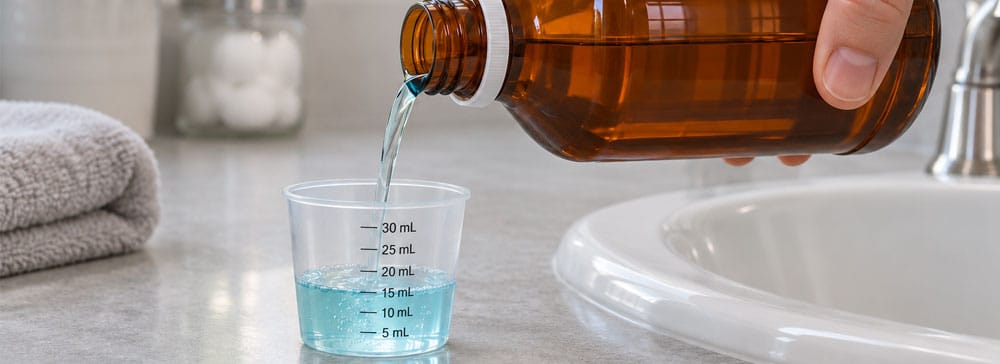
This type of mouthwash is usually used twice a day, often in the morning and at night. Basically, you just need to measure the prescribed amount (typically 15 ml), swish it around your mouth for 30 seconds, and spit it out. Don’t swallow it or rinse with water afterward. Wait at least 30 minutes before eating or drinking, and follow your dentist’s recommendation on how long to use it.
What Happens if You Miss a Dose?
Missing a dose isn’t a huge deal; just use it again when you remember. However, if it’s almost time for your next dose, just skip the missed one and continue with your regular schedule. Don’t double up to make up for a missed dose.
How to Store Chlorhexidine Mouthwash
Keep chlorhexidine mouthwash at room temperature, away from direct sunlight, heat, and moisture. Always make sure the bottle is tightly closed and stored somewhere children and pets can’t reach it. It’s also a good idea to check the expiration date before using it just to be safe.
What Precautions Should You Take?
Before using, let your dentist know about any allergies, medications, or other oral health products you’re using. Wait at least 30 minutes after brushing your teeth before using it, since some toothpaste ingredients can make it less effective. Avoid swallowing the rinse, and stop using it and seek medical attention right away if you notice any signs of a serious allergic reaction.
Chlorhexidine Mouthwash vs. Regular Mouthwash
The biggest difference between chlorhexidine and other regular mouthwash is what they’re designed to do. Most over-the-counter mouthwashes help freshen breath, reduce plaque, or prevent cavities. Chlorhexidine is a prescription rinse specifically used to control bacteria and gum inflammation. And while it’s generally recommended for short-term treatment, regular over-the-counter mouthwashes are designed for daily use when used as directed.
Can Chlorhexidine Mouthwash Treat Periodontitis?
Chlorhexidine mouthwash can help manage bacteria and inflammation associated with periodontitis, but it can’t go so far as to treat advanced gum disease on its own. It doesn’t remove hardened tartar or clean deep periodontal pockets, where harmful bacteria have a tendency to collect. If you have periodontitis, professional treatment like scaling and root planing may be necessary to control the infection and protect your gums and supporting bone.
How Long Does Chlorhexidine Mouthwash Take to Work?
Chlorhexidine mouthwash starts killing bacteria shortly after you use it, but it may take several days to notice improvements in gum inflammation, swelling, or bleeding. Results depend on your gum health and the condition being treated. For the best results, use it consistently and follow your dentist’s instructions.
Healthy Gums Start With the Right Care
Chlorhexidine mouthwashes can be a very helpful part of improving your gum health, but it’s not something you’ll want to rely on for too long. The key is understanding when it’s truly needed and making sure you’re addressing the underlying cause of your gum problems. If you’re dealing with swollen, bleeding, or irritated gums, our friendly team at Utah Periodontal Specialists is here to help every step of the way. With convenient locations in Salt Lake City and South Jordan, Utah, we can help you find the right treatment to get your gums back on track.
FAQs
What does chlorhexidine mouthwash do for gum disease?
Chlorhexidine mouthwash kills bacteria, reduces plaque, and helps control gum inflammation. It’s often prescribed for gingivitis or other dental procedures, but doesn’t replace regular brushing, flossing, or professional treatment.
How long should you use chlorhexidine mouthwash?
Chlorhexidine mouthwash is typically prescribed for short-term use, usually around 2 weeks. Follow your dentist’s instructions, as p using it for too long can cause staining and other side effects.
Should you use chlorhexidine before or after brushing?
It’s generally recommended to use it after brushing, but wait at least 30 minutes since some toothpaste ingredients can reduce its effectiveness. Avoid eating or drinking for 30 minutes afterward.
Does chlorhexidine mouthwash stain your teeth?
Yes, chlorhexidine can cause brown or yellowish stains on your teeth, especially with prolonged use. Coffee, tea, and red wines can make staining more noticeable.
Can chlorhexidine stains be removed from teeth?
Yes, most chlorhexidine stains can be removed with a professional dental cleaning. Regular brushing might not be enough to remove the discoloration.
Recent Comments