

Key Loose Tooth Luxation Takeaways
-
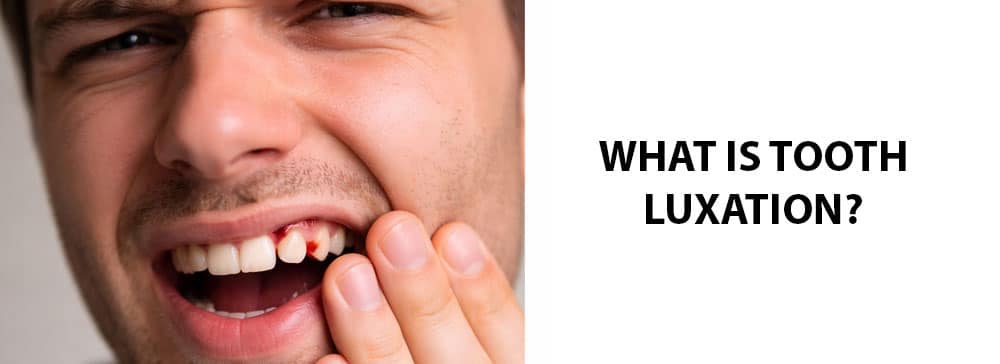
Tooth luxation is a dental injury where a tooth is knocked loose or displaced but not fully knocked out, often caused by trauma like sports injuries, falls, or accidents.
-
It can range in severity, from mild tenderness (concussion or subluxation) to visible displacement (extrusive, intrusive, or lateral luxation).
-
Common symptoms include pain, sensitivity, looseness, and misalignment, and diagnosis typically involves a dental exam and X-rays.
-
Treatment depends on severity and may involve monitoring, repositioning, or stabilization, with early care being key to preventing long-term complications.
If you haven’t heard the term “tooth luxation”, don’t feel like you’re out of the loop. It’s not a super common term. Basically, it’s a fancy way of talking about when a tooth gets knocked loose or is pushed out of place because of some trauma or injury. Continue reading, and we’ll go over symptoms and causes, treatment, prevention, and more. If you need treatment for a tooth luxation in Utah, we have offices conveniently located near West Valley, North Salt Lake, Sandy, and Lehi.
What is Tooth Luxation?
Tooth luxation is a type of dental injury where a tooth is still in place, but it’s not sitting quite right in its socket. Instead of feeling stable, the tooth has shifted because the structures that normally hold it in place have been disrupted. This could include ligament fibers and surrounding bone that keep everything anchored.
When the support system is disrupted, the tooth can move in several different ways. It might feel a little loose, sit slightly out of alignment, or even be pushed deeper into the gum. So, the tooth hasn’t been completely knocked out, but it’s no longer positioned or supported in the correct way.
How Common is Tooth Luxation?
Tooth luxation isn’t super common, but at the same time isn’t considered rare. It shows up much more often in kids and teens, especially with sports and playgrounds. It happens often enough that dental professionals need to know how to treat it, but most people probably won’t ever have to deal with it.
Damaged Periodontal Ligaments
Damaged periodontal ligaments are made up of tiny fibers that connect the tooth to the surrounding bone and help keep it stable while still allowing a little natural movement. When they get torn or stretched, that connection weakens, which is why the tooth can shift. Even though they’re small, they play a huge role in making sure everything stays functioning properly.
Types of Tooth Luxation
- Concussion – The tooth remains stable and in place, but the supporting structures have been impacted, typically causing tenderness.
- Subluxation – The tooth is slightly loose due to minor damage to the supporting tissues, but it hasn’t actually shifted out of position.
- Extrusive Luxation – The tooth is partially displaced outward and might appear longer than the teeth surrounding it.
- Intrusive Luxation – The tooth is driven deeper into the gum, making it look shorter or pushed inward.
- Lateral Luxation – When the tooth is displaced to the side, it often results in noticeable misalignment.
Tooth Luxation vs Subluxation
Subluxation is considered a milder form of dental injury where the tooth is loose but still in the proper position. Tooth luxation goes a step further because the tooth actually becomes displaced within the socket.
Tooth Luxation vs Avulsion
Tooth luxation means the tooth is still present in the socket, even if it’s out of position. Avulsion is much more serious and refers to complete displacement, where the tooth is entirely knocked out.
Symptoms of Tooth Luxation
- Discomfort or pain when biting or chewing
- Increased sensitivity to hot or cold
- A feeling that the tooth is “off” compared to others
- Visible misalignment with surrounding teeth
- Tenderness when touching the tooth or nearby gums
- Swelling or slight bleeding around the affected area
Causes of Tooth Luxation
- Direct impact on the mouth during sports or activities
- Accidental falls or blows to the face or jaw
- Car accidents or similar high-force incidents
- Biting down on something unexpectedly hard
- Any sudden force strong enough to shift the tooth within its socket
Problems Tooth Luxation Causes
One of the biggest concerns with tooth luxation is how the tooth ends up responding over time. The inner part of the tooth, where the nerve and blood supply are, can sometimes be affected, which might lead to changes in color or the tooth not staying alive. The body might also start to break down or reabsorb parts of the tooth root, which can impact how stable it stays down the road.
There can also be a kind of ripple effect on the surrounding areas. The bone and nearby teeth can be affected if the alignment is off, and that can change how your bite comes together. Having that uneven pressure over time when chewing can place added strain on certain teeth. It’s not always something you notice right away, but it can slowly create issues that will show up and give you grief later.
How Is Tooth Luxation Diagnosed?
Tooth luxation is usually diagnosed with a simple dental exam. A dentist will check how the tooth sits compared to the others, gently test its stability, and look at how it responds to pressure. They’ll also take X-rays to see what’s going on below the surface, including the position of the tooth and the surrounding bone. Together, that gives a clear picture of how much the tooth has shifted and what’s going on internally.
Management and Treatment of Tooth Luxation
The treatment you go with will really depend on how far things have shifted. Sometimes your dentist might suggest giving it time and babying that tooth more than normal, hoping the situation will settle back down. Other times, your dentist might step in to nudge the tooth back where it belongs and hold it in place for a bit so it can stabilize.
After that, it’s mostly about keeping an eye on it, which means a few extra check-ins to make sure everything is healing in the right way. If it doesn’t bounce back like expected, there are other measures to consider. The key is getting it treated as early as possible.
How to Prevent Tooth Luxation
- Wear a mouthguard during sports – Especially for contact sports or activities with a fall risk
- Be careful with hard foods – Avoid biting directly into very hard things like ice, unpopped kernels, or hard candy
- Use proper safety gear – Helmets and face protection can greatly reduce impact injuries
- Avoid using teeth as tools – Opening packages or biting non-food items can put unnecessary stress on teeth
- Keep up with dental checkups – Healthy teeth and gums are more resilient to injury
How to Take Care of Tooth Luxation
Think of caring for a tooth luxation as simply managing the situation while it stabilizes. Try to avoid anything that makes you notice it more. If you find yourself adjusting how you eat or talk because of it, take note and action if it persists. If it fades into the background over time, you’re probably on the right track. If it keeps drawing your attention, that’s your sign to go get it looked at.
When To See a Periodontist
There’s really no cut-and-dry way of knowing when it’s time to check in with a periodontist, but there are a few indicators it helps to go by. Trust your gut and make an appointment if something just doesn’t feel right and isn’t getting better, or maybe even if a tooth just feels a little off. A Periodontist focuses on the support system around your teeth, so they’re the go-to when you notice things feel unstable or weak.
How To Take Care Of Tooth Luxation Conclusion
Tooth luxation can definitely catch you off guard, but it doesn’t have to be a huge and scary hurdle. It can be totally manageable once you know what’s going on and how to address it. It really comes down to recognizing that something has shifted, giving it the right amount of care, and knowing when to have it looked at. The sooner you get on top of it, the better chance you have of everything getting back to normal without bigger issues down the road.
If you feel like you might be dealing with a tooth luxation that needs attention, it’s worth reaching out. The friendly team at Utah Periodontal Specialists is here to help you figure out the next steps and get things headed in the right direction. You can visit us at one of our locations in South Jordan or Salt Lake City, and we’ll work with you to find the best way forward so you can feel confident about your smile again.
Tooth Luxation FAQs
- Can a luxated tooth heal on its own?
In some cases, yes. If the movement is fairly minor, the tooth can stabilize over time with proper care and management.
- Will a luxated tooth always need treatment later on?
Not always. Some teeth recover fully, while others might need additional care depending on how they respond over time.
- Can a luxated tooth change color?
Yes, it can. This can happen if the inner part of the tooth is affected, and it’s something a dentist may want to evaluate.
- Is it safe to brush around a luxated tooth?
Yes, but it’s very important to be gentle and avoid putting extra pressure on that specific area while brushing.
- Can adults and kids experience tooth luxation differently?
They can. Younger patients generally heal differently because their teeth and supporting structures are still developing.
Recent Comments