

Key Takeaways
-
An impacted tooth is a tooth that fails to fully erupt through the gums, often getting trapped under gum tissue, bone, or against another tooth. Many people don’t realize they have one until it appears on a dental X-ray.
-
Common symptoms include persistent aching in one area, pressure in the back of the mouth, swollen gums, pain when chewing, jaw stiffness, and bad breath caused by bacteria around a partially erupted tooth.
-
Impacted teeth usually occur due to limited space in the jaw or genetics affecting tooth alignment. Wisdom teeth are the most commonly impacted, though other teeth like upper canines can also be affected.
What is an impacted tooth? You commonly hear the phrase, but there’s a lot to understand about what causes them, their symptoms, and what treatments are recommended. We’ll cover everything you need to know, so if you or someone you know is affected, you’ll be able to move forward in the best way possible. If you need impacted tooth treatment in Utah, we have offices conveniently located near Bountiful, North Salt Lake, Draper, and Lehi.
What is an Impacted Tooth?
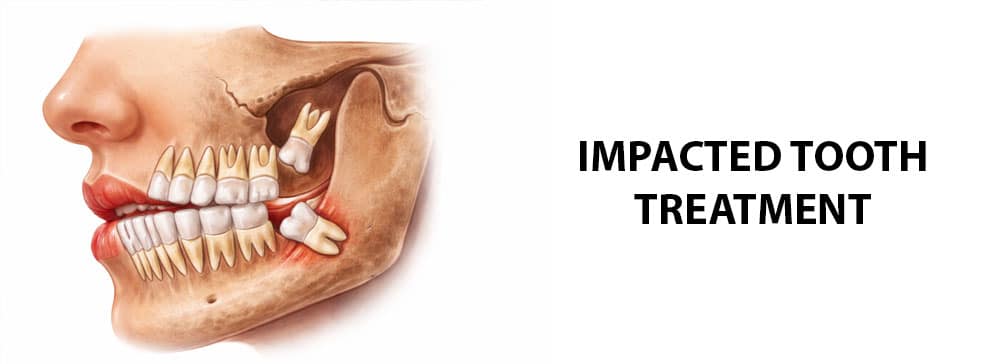
An impacted tooth is a tooth that doesn’t fully come through the gums the way it’s supposed to. Instead of erupting into its normal position, it gets stuck beneath the gum tissue or partially trapped against another tooth. In a lot of cases, people don’t even realize a tooth is impacted until an X-ray shows it.
Types of Impacted Teeth
Impacted teeth aren’t all the same. The way a tooth is positioned under the gums makes a big difference in how it behaves and what kind of treatment might be needed. Here’s a simple breakdown of the main types you’ll hear about:
- Soft tissue impaction – The tooth has pushed through the jawbone but is still covered by gum tissue. It’s close to the surface but not fully erupted.
- Partial bony impaction – Part of the tooth has come through, but a portion is still trapped in the jawbone.
- Full bony impaction – The tooth is completely encased in the jawbone and hasn’t broken through at all.
- Mesial impaction – The tooth is angled forward, leaning toward the front of your mouth. This is one of the more common positions.
- Distal impaction – The tooth tilts backward toward the rear of your mouth, which is less common.
- Horizontal impaction – The tooth is lying sideways under the gums, almost like it decided to take a nap instead of erupting upright.
What Causes Impacted Teeth?
Impacted teeth usually come down to space and timing. If your jaw doesn’t have enough room for a tooth to come in properly, it can get stuck before it ever reaches the surface. This is why wisdom teeth are so commonly impacted. They’re the last to show up and often don’t have much space left to work with.
Genetics also play a big role. The size of your jaw, the size of your teeth, and how they’re positioned are often inherited. Sometimes a tooth simply develops at an odd angle or follows a path that puts it directly in line with another tooth. When that happens, it can’t move into place the way it’s supposed to. It’s less about something you did and more about how everything was lined up from the start.
What are the Symptoms of an Impacted Tooth
- Persistent ache in one area – A dull, lingering pain that keeps coming back in the same spot.
- Pressure in the back of the mouth – It can feel like there just isn’t enough room for everything.
- Swollen or tender gums – Puffiness or sensitivity around a specific tooth that doesn’t fully settle down.
- Pain when chewing on one side – Discomfort that shows up when you bite down or put pressure on that area.
- Jaw stiffness or soreness – Tightness in the jaw that can sometimes spread toward the ear.
- Bad taste or lingering bad breath – Often caused by bacteria getting trapped around a partially erupted tooth.
How Common Are They?
Impacted teeth are actually pretty common. The most frequent ones by far are wisdom teeth. Studies also estimate that up to 9 out of 10 people have at least one impacted third molar. Other teeth, like upper canines, can also become impacted, but that happens far less often.
How Serious Are They?
Impacted teeth aren’t always an emergency, but that doesn’t mean they should be ignored. You can have an impacted tooth for years and not have any problems with it. However, once more serious symptoms show up, some pretty severe damage might have already taken place.
Complications of Impacted Teeth
When an impacted tooth starts causing trouble, it’s usually because of what’s happening around it. Since the tooth isn’t fully in place, it can create tight spaces that are hard to clean. That makes it easier for bacteria to build up and irritate the surrounding gums. Over time, that irritation can turn into an infection or more significant inflammation.
An impacted tooth can also push against neighboring teeth. That pressure may lead to crowding, shifting, or damage to the tooth next to it. In some cases, a fluid-filled sac can form around the impacted tooth, which can affect the surrounding bone if it grows. None of this happens overnight, but when complications do develop, they tend to escalate rather than quietly go away. That’s why monitoring and timely treatment matter.
How is an Impacted Tooth Diagnosed?
Impacted teeth are usually found during a regular dental visit. Sometimes your dentist notices a tooth hasn’t come in on schedule, or that there’s swelling, tenderness, or a pocket forming in a certain spot. You might also mention pressure in your jaw, lingering soreness in the back of your mouth, or repeated gum irritation in the same area.
To confirm what’s actually going on beneath the surface, your dentist will most likely use imaging to get a clear look at how the tooth is positioned and whether it’s blocked from coming in properly. Ideally, it’s something that’s picked up early during routine checkups, even before you notice any symptoms.
How Are They Treated?
The right treatment depends on how the tooth is situated and if it’s causing any problems. The goal is always the same: protect the surrounding teeth, bone, and gums while preventing future complications.
Monitoring – If the impacted tooth isn’t causing damage or discomfort, your dentist may simply keep an eye on it with periodic exams.
Professional cleaning and gum care – For partially erupted teeth, keeping the area clean can sometimes reduce irritation and lower the risk of infection.
Operculectomy – If gum tissue is covering part of the tooth and trapping bacteria, a small procedure can remove that extra tissue to make cleaning easier.
Orthodontic treatment – In certain cases, especially with impacted canines, braces or other orthodontic methods can help guide the tooth into its proper position.
Surgical extraction – When the tooth isn’t likely to erupt properly or is causing ongoing issues, removing it can be the most predictable solution. This is especially common with wisdom teeth.
Will It Heal On Its Own?
Impacted teeth don’t really “heal” on their own. If a tooth is blocked by bone, gum tissue, or another tooth, it can’t simply fix its position over time. In some mild cases, a partially impacted tooth may eventually come in a bit more as your jaw changes, but fully impacted teeth typically stay that way without treatment.
When Should You See a Periodontist?
A good rule of thumb is this: if your regular dentist starts paying closer attention to it or suggests a referral, that’s usually your sign it’s time to see a periodontist. Most impacted teeth are first spotted by a general dentist, but when the position of the tooth starts affecting the surrounding bone and gums, a specialist’s input becomes important.
How Much Does Impacted Tooth Surgery Cost in Utah?
If you’ve ever tried pricing out dental work, you already know the answer is usually, “It depends.” In Utah, the cost of impacted tooth surgery can vary quite a bit based on how complex the case is, how many teeth need to be removed, and whether you have dental insurance. For impacted wisdom teeth, surgical removal often ranges anywhere from about $600 to over $2,000 per tooth without insurance, depending on the difficulty and the provider.
The type of anesthesia used, whether you’re seeing a general dentist or an oral surgeon, and any additional imaging or follow-up care can also affect the total. The good news is that many insurance plans cover a portion of impacted tooth removal, especially if it’s considered medically necessary, which can significantly reduce your out-of-pocket cost.
Impacted Tooth Conclusion
Impacted teeth are really about awareness and timing. They’re not always dramatic, but they can quietly create issues if they’re left unchecked. The biggest advantage you have is catching things early, before discomfort turns into something more complicated. Staying proactive gives you options, and options almost always mean simpler, less expensive treatment.
If you ever have questions or just want peace of mind, our experienced and friendly team at Utah Periodontal Specialists is here to help. With convenient locations in South Jordan and Salt Lake City, we make it easy to stay on top of your gum and bone health.
Recent Comments