

Soothing TMJ pain can make a big difference in how you feel each day, especially when jaw tension or soreness just won’t go away. It’s more common than many people realize, with studies showing that about 10 to 35 percent of adults experience some form of TMJ disorder. The pain can be on the mild side for some and much more intense for others. In this article, we’ll go over common symptoms, simple ways to ease the discomfort, and habits that could be making it worse. Our offices are conveniently located near Taylorsville, Bountiful, Midvale, Sandy, Draper, and West Jordan.
What Is TMJ?
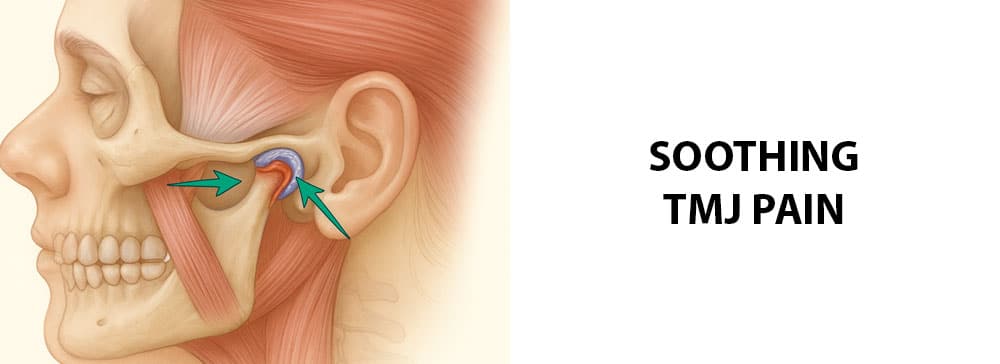
TMJ stands for temporomandibular joint, which is the hinge that connects your jawbone to your skull. It’s one of the most complex joints in the body, allowing your jaw to move up and down, side to side, and even slightly forward and backward. This intricate system of muscles, ligaments, and bones works together to help you talk, chew, and yawn. When something goes wrong with that hinge or the surrounding muscles, it’s known as a TMJ disorder, or TMD.
TMD vs TMJ
You’ll often hear people use TMJ and TMD interchangeably, but they aren’t the same thing. TMJ is the actual joint that connects your jaw to your skull. TMD, short for temporomandibular disorder, refers to the problems or pain that happen in that joint and the surrounding muscles. So if your jaw clicks, locks, or aches, you’re technically dealing with TMD, not TMJ itself. Still, most people just say TMJ when they’re talking about jaw pain, which is completely normal.
Does TMJ Go Away On Its Own?
TMJ pain can certainly go away on its own, especially if it’s mild or caused by factors like tension or stress. For many people, symptoms ease over time as the jaw relaxes and inflammation decreases. However, this isn’t always the case. If the issue stems from something more chronic, such as jaw alignment problems or clenching, it might prove more unpredictable. Everyone’s experience is a little different. While some find their pain fades naturally, others may notice it’s an issue that needs professional attention before finding relief.
Home Remedies For TMJ
Several simple home remedies can help ease TMJ pain and tension. These methods focus on relaxing the jaw, reducing inflammation, and giving your muscles time to recover. While they won’t fix every case, they often bring much-needed relief when practiced consistently.
1. Apply warm or cold compresses
A warm compress helps relax tight jaw muscles, while a cold pack can reduce inflammation and numb soreness. Try alternating between the two to see what feels best for you.
2. Eat softer foods
Chewing tough or crunchy foods can strain your jaw. Stick with soups, yogurt, mashed potatoes, and scrambled eggs to give the joint a break. Try to avoid things like steak, chewy bread, raw carrots, nuts, or gum, since they require a lot of chewing and can make the pain worse.
3. Practice jaw relaxation
Gently keeping your teeth slightly apart and letting your tongue rest between them can ease tension. It also helps you become more aware of when you’re clenching.
4. Massage the jaw muscles
Lightly massaging the sides of your face near the jaw joint can help release tightness and improve blood flow. This can make it easier to open and close your mouth without discomfort.
5. Manage stress
Reducing stress in your life is always easier said than done. But stress often leads to jaw clenching without realizing it. Taking short breaks during your workday, stretching, or practicing deep breathing can help relax both your body and your jaw.
6. Maintain good posture
Oddly enough, slouching can affect how your jaw lines up with your skull. Keeping your head aligned with your spine, especially when using a phone or computer, can help reduce strain on the TMJ.
Symptoms of TMJ
Jaw pain on one side is a common symptom of TMJ issues, and often happens because one side of the joint is working harder or becomes irritated. This can result from things like uneven chewing, grinding your teeth, or sleeping on one side more than the other. When that imbalance builds up, it puts extra pressure on the joint and surrounding muscles.
Common symptoms of TMJ include:
- Pain on one or both sides of the jaw – often worse when chewing or talking.
- Clicking or popping sounds – when you open or close your mouth.
- Jaw stiffness or tightness – especially in the morning or after chewing.
- Headaches or earaches – pain that radiates from the jaw to nearby areas.
- Difficulty opening or closing your mouth fully – sometimes the jaw may even lock.
- Tenderness in the face, neck, or shoulders – from muscles trying to compensate for the strain.
Can TMJ Cause Ear Pain?
Yes, TMJ problems can definitely cause ear pain. The joint sits very close to the ear canal, so when it becomes irritated or inflamed, that discomfort can easily spread. Many people mistake TMJ-related pain for an ear infection because it can feel deep inside the ear or cause a sense of fullness or pressure. In reality, it’s the muscles and joints near the ear reacting to strain or inflammation in the jaw.
Remedies for TMJ Ear Pain
When TMJ leads to ear pain, there are a few extra things you can try for relief. A warm compress over the area right in front of your ear can help loosen tight muscles and ease that deep ache. Sleeping with your head slightly propped up can also make a difference by taking pressure off the joint. Some people notice a big improvement when they use a night guard to stop clenching or grinding while they sleep. Gentle jaw stretches, especially the kind your dentist or physical therapist can show you, may also help take the pressure off and calm things down around the ear.
TMJ Nerve Damage Symptoms
If TMJ pain involves nerve damage, the symptoms can feel a little different from regular jaw discomfort. Instead of the typical tightness, you might notice sharp, shooting, or burning pain that spreads to your face, neck, or ear. Some people also experience tingling, numbness, or a pins-and-needles feeling around the jaw or cheek.
When To See a Doctor For TMJ Pain
Consider seeing a doctor if your TMJ pain isn’t improving after a couple of weeks or if it starts getting worse. It’s also worth making an appointment if your jaw starts locking, popping painfully, or making it hard to open or close your mouth fully. Constant headaches, ear pain, or discomfort that spreads to your neck and shoulders can also be signs it’s time for professional care. Basically, if the pain is interfering with your daily life or not going away on its own, getting it checked out is the smart move.
What Happens If You Don’t Get Treatment
If your TMJ goes untreated, it can eventually lead to more serious problems. The constant strain on the joint can cause long-term inflammation, muscle tightness, and wear on the cartilage. Over time, this can make it harder to move your jaw normally or fully open your mouth. Some people also develop chronic headaches or facial pain that become tougher to manage the longer they go ignored.
The Guide To Soothing TMJ Pain Conclusion
Living with TMJ pain can be a lot, especially when it starts affecting things like eating or talking. The good news is, you don’t have to just live with it. Paying attention to early signs and getting the right care can make all the difference in keeping your jaw healthy and pain-free. If you’re noticing symptoms of TMJ or have other oral health concerns and live in the South Jordan or Salt Lake City areas, reach out to our team. We’ve helped many patients find real relief and know what it takes to treat the problem at its source so you can get back to feeling like yourself again.
Recent Comments